
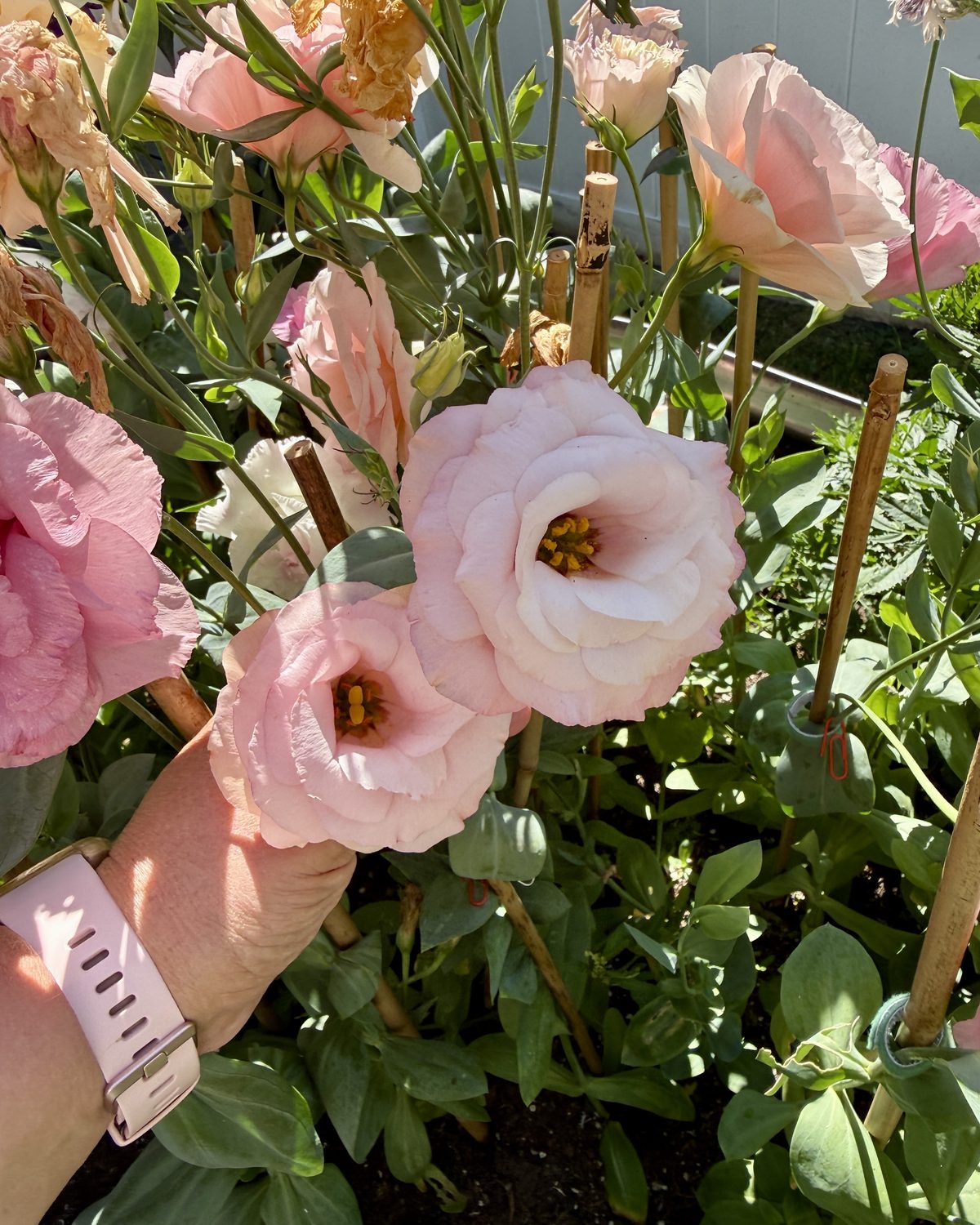
Lisianthus Jolly Pink
A shorter, earlier lisianthus in bright pink. Good for pots or the front of a bed. Long lasting when cut.
OPEN POLLINATED SEEDS, NOT PELLETED
Growing
- tender perennial
- Full sun
- Not recommended
- 12 to 13 weeks before last frost
- Not covered
- 10 to 15 days at 20 to 22°C (68 to 72°F)
- 10 to 20 cm (4 to 8 in)
- 30 to 86 cm (12 to 34 in)
- 23 to 30 cm (9 to 12 in)
- Benefits from support
- 10 to 15 days
A clear, bright pink. Jolly is shorter and earlier than the tall cutting types, so it's easier to fit in and good in a small jar. Slow to grow from seed, but well worth the wait. Long lasting in water. This seed was saved from my own Jolly Pink plants. The parents are hybrids, so saved seed won't come back exactly the same. Expect some change in colour and fullness. Mine have come close so far. Lisianthus seed is like dust, so there's no seed count. A packet is one level 1/16 teaspoon pinch spoon.
Sowing and starting
Lisianthus is slow. Sow it 12 to 13 weeks before you plant out. Press the seed onto a fine, damp mix and don't cover it, since it needs light to sprout. A light dusting of vermiculite is fine. It comes up in 10 to 15 days at 20 to 22°C (68 to 72°F).
The seedlings stay tiny for weeks. That's normal, so don't give up on the tray. Keep them under good light and never let them dry out. Once they have four or five leaves, move them into deep cells, since they grow a long root early. Don't sow it straight into the garden.
Care
Plant 10 to 20 cm (4 to 8 in) apart in full sun, in well-drained soil with plenty of compost. The stems grow 30 to 86 cm (12 to 34 in) long. It flowers late in the season. It benefits from support. If you're growing a lot of plants, Hortonova netting works best, laid 30 to 46 cm (12 to 18 in) above the bed.
When to cut
I recommend cutting off the first bloom and letting the second and third open. Often another bud or two will open.
In the vase
Keep it in a cool room. It lasts even longer if it can sit somewhere around 2 to 5°C (36 to 41°F) overnight.
When cutting a bouquet, strip any leaves that would sit under water. They turn the water murky fast. Change the water every few days for the longest lasting bouquet. As flowers fade, you can remove them and rearrange the remaining flowers.